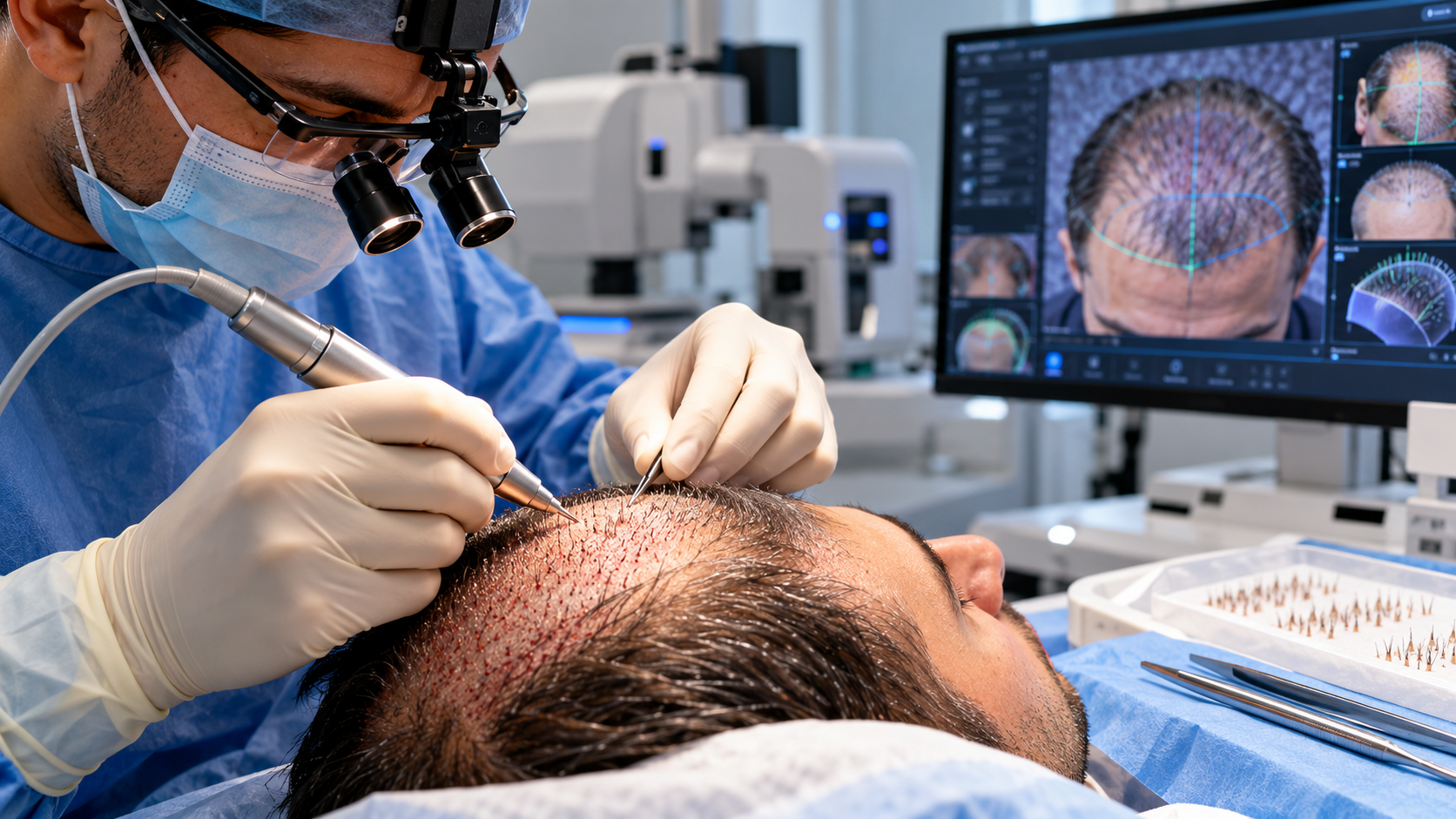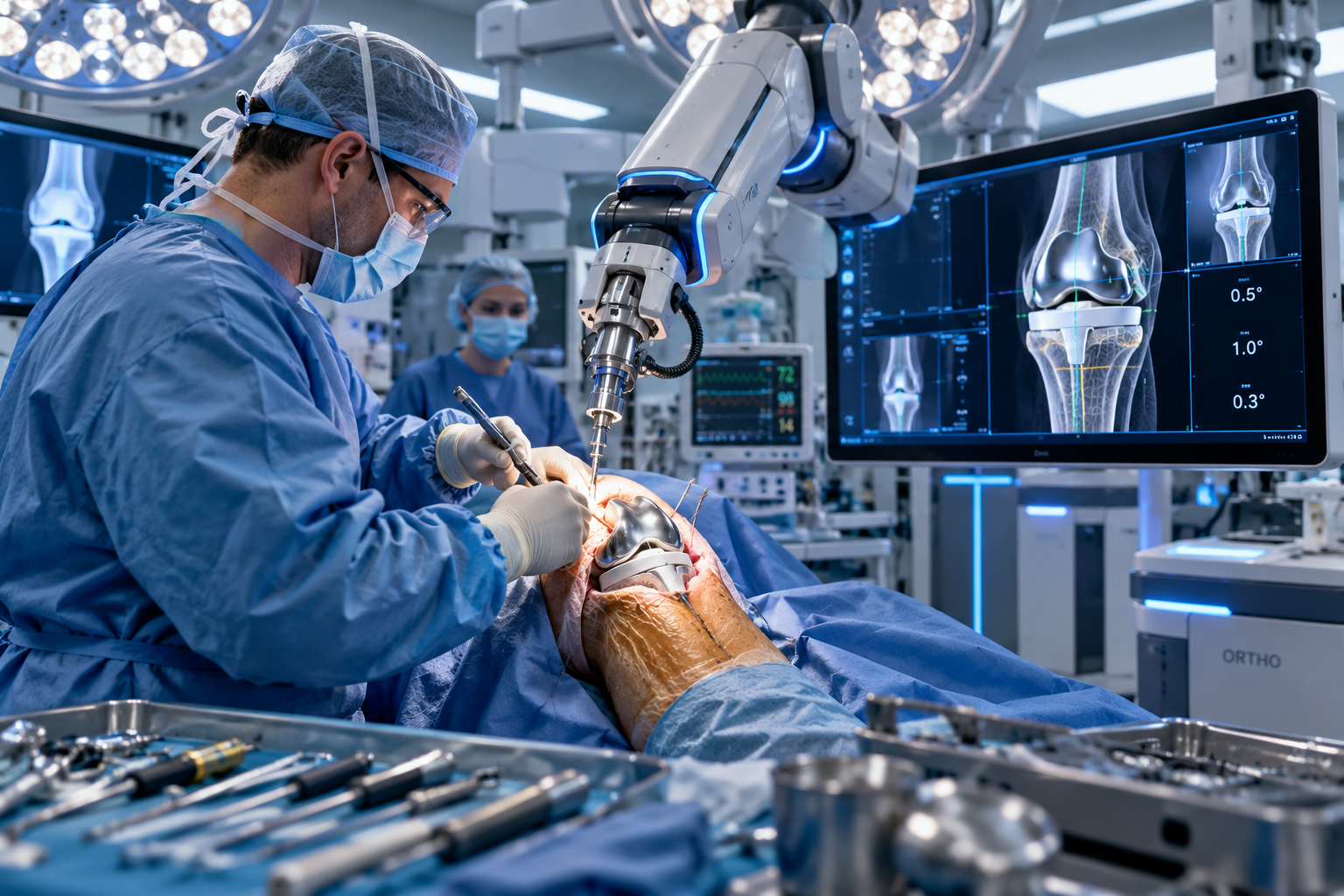
Orthopedic surgery has undergone a profound transformation over the past decade. What was once viewed as a standard, mechanical carpentry procedure—where surgeons manually sawed bone and jammed in metal and plastic components using visual estimates—has evolved into a high-precision, data-driven medical discipline.
For decades, patients suffering from debilitating knee osteoarthritis faced a one-size-fits-all approach. Implants came in a limited set of sizes, surgical alignment relied on simple handheld alignment rods, and recovery was often defined by guesswork, trial, and lengthy hospital stays. Today, the convergence of advanced material science, robotic-assisted surgical platforms, patient-specific 3D printing, and internet-connected smart implants has completely rewritten the playbook for joint reconstruction.
If you or a loved one are exploring options for chronic knee pain, understanding modern knee replacement technology is the first step toward reclaiming mobility. This comprehensive guide explores the cutting-edge innovations driving modern orthopedics, examining how implants, robotics, and digital recovery ecosystems are improving surgical precision and patient outcomes.
The Evolution of Knee Replacement: Moving Beyond “One-Size-Fits-All”
To understand where knee replacement technology is today, it helps to understand where it came from. Traditional total knee arthroplasty (TKA) aimed to replace the damaged surfaces of the femur (thighbone), tibia (shinbone), and patella (kneecap) with metal and medical-grade polyethylene components. While these historic surgeries successfully relieved pain for millions, they suffered from a fundamental limitation: anatomical mismatch.
Standard implants were designed based on historical average dimensions of human bones. However, human anatomy varies wildly based on sex, ethnicity, height, genetics, and lifestyle. An implant that was slightly too wide could cause soft-tissue irritation and chronic pain, while an implant that was too small could lead to bone overhang, instability, and premature wear.
Modern Material Science and Customization
Modern implant engineering focuses heavily on biomimetic design—creating components that mimic the natural geometry and kinematic motion of a healthy human knee.
-
Advanced Alloys: Implants are predominantly forged from biocompatible metals like cobalt-chromium-molybdenum alloys or lightweight, highly durable titanium. For patients with metal sensitivities, specialized hypoallergenic zirconium-niobium alloys are increasingly utilized.
-
Highly Cross-Linked Polyethylene: The plastic spacer placed between the metal femoral and tibial components has seen major improvements. Modern manufacturing utilizes radiation-cross-linked polyethylene infused with antioxidants (like Vitamin E) to dramatically reduce wear debris, which historically caused bone resorption (osteolysis) and implant loosening over time.
Breakthroughs in Implant Technologies
When evaluating modern options, leading medical device manufacturers offer specialized systems designed to match specific patient anatomies and disease states.
Persona®: The Personalized Knee System
One of the premier advancements in patient-matched geometry is Zimmer Biomet’s Persona® The Personalized Knee® system. Rather than forcing a surgeon to choose from a limited array of standard sizes, Persona utilizes extensive morphological data gathered from diverse populations to offer an expansive matrix of sizes and micro-adjustments.
-
Anatomical Matching: The system allows surgeons to tailor the implant to closely mirror the patient’s unique bone contours.
-
Bone Conservation: By offering finely graded sizing options, surgeons can preserve more healthy native bone during the resection phase, maintaining a more natural structural foundation.
Persona IQ®: The World’s First “Smart Knee”
Perhaps the most futuristic leap in orthopedic hardware is the integration of Internet of Things (IoT) technology directly into the joint. Persona IQ® combines the proven design of the Persona knee with an intelligent tibial stem extension containing embedded micro-sensors.
-
Objective Data Tracking: After surgery, the smart stem seamlessly collects continuous kinematic motion data—such as range of motion, step counts, walking velocity, and stride length.
-
Post-Operative Insights: This objective data is transmitted securely to cloud platforms, giving surgical teams deep visibility into how the patient is recovering in the real world, far beyond what can be observed during a brief, intermittent 6-week post-op clinic visit.
Oxford® Partial Knee Implant System
Not every patient requires a total knee replacement. When osteoarthritis is isolated to a single compartment of the joint (most commonly the medial, or inner, compartment), a unicompartmental or partial knee replacement is often a superior choice.
-
Ligament and Cartilage Preservation: A partial replacement replaces only the diseased portion of the joint, leaving the healthy cartilage and critical cruciate ligaments intact.
-
Quicker Recovery and Superior Function: Clinical studies demonstrate that patients fitted with systems like the Oxford® Partial Knee often experience a more natural feeling knee. Many patients report being able to “forget” they have an artificial joint during daily activities and exhibit higher rates of return to low-impact sports and recreational activities—such as hiking, cycling, golf, and swimming—compared to total knee patients.
Robotic-Assisted Surgery: Precision Meets Human Expertise
While high-tech implants provide the hardware, robotic-assisted surgical platforms provide the execution precision. It is a common misconception that surgical robots perform the operation autonomously. In reality, the surgeon remains in full control of the operating room at all times, making every critical decision while utilizing robotic systems as an advanced guidance tool.
The ROSA® Knee System
An industry-leading example of this technology is the ROSA® (Robotic Surgical Assistant) Knee platform. ROSA assists orthopedic surgeons by combining pre-operative planning software with real-time intra-operative data tracking.
Pre-Operative Mapping: Depending on the system configuration, imaging or advanced anatomical landmark mapping is performed to build a dynamic 3D virtual model of the patient’s unique knee joint.
Real-Time Dynamic Balancing: During the procedure, ROSA tracks the exact tension of the soft tissues and ligaments throughout the entire range of motion (extension to flexion). This allows the surgeon to optimize implant positioning and bone cuts to achieve a balanced, stable joint before any permanent hardware is fixed.
Sub-Millimeter Accuracy: While human hands and manual cutting blocks are inherently subject to minor variances, robotic assistance guides bone resection adjustments down to fractions of a millimeter and degrees of alignment accuracy.
Why Robotic-Assisted Surgery Matters:
-
Reduced Trauma: Precise bone cuts minimize unnecessary disruption to surrounding soft tissues.
-
Enhanced Longevity: Perfect mechanical alignment distributes body weight evenly across the implant surfaces, theoretically reducing uneven wear patterns and extending the functional lifespan of the prosthesis.
-
Consistent Outliers Reduction: Studies show that robotic assistance significantly reduces the number of outlier surgeries—instances where manual alignment deviates from the ideal neutral axis.
The Digital Recovery Ecosystem: Remote Care and App-Driven Rehabilitation
Surgery is only half the battle; long-term functional success heavily depends on diligent post-operative physical therapy and recovery management. Modern knee replacement technology extends well beyond the operating room doors through digital health applications.
Platforms like mymobility® connect patients directly with their care teams before and after surgery.
-
Pre-Habilitation Preparation: Patients receive guided educational content, physical therapy exercises to strengthen supporting muscles prior to surgery, and clear milestone checklists to reduce anxiety.
-
Remote Monitoring: Post-operatively, patients can log daily pain scores, track exercise completion, and communicate securely with their clinical coordinators.
-
Data-Driven Adjustments: Care teams can monitor recovery progress remotely, intervening early if a patient is falling behind on range-of-motion milestones or experiencing unexpected complications.
Non-Surgical and Interventional Technologies
For patients whose osteoarthritis has not yet progressed to the point requiring full or partial joint replacement, technological innovations in interventional pain management have introduced powerful bridge therapies.
-
Hyaluronate Injectable Therapies (e.g., Gel-One®): Viscosupplementation involves injecting a gel-like substance (hyaluronic acid) directly into the intra-articular knee space. This mimics the natural synovial fluid of a healthy joint, providing cushioning, shock absorption, and lubrication to reduce friction and pain for up to six months, delaying the need for surgical intervention.
What to Expect: The Modern Knee Replacement Journey
If you are navigating chronic knee pain and considering whether modern technology is right for you, here is what the clinical pathway typically looks like:
Comprehensive Evaluation: An orthopedic specialist conducts physical examinations and weight-bearing X-rays or advanced imaging to assess cartilage wear, bone spurs, and overall structural alignment.
Personalized Treatment Planning: If conservative measures (physical therapy, NSAIDs, weight management, and injections) are exhausted, the surgeon evaluates whether you are a candidate for total knee replacement, partial knee replacement, or robotic-assisted approaches.
The Procedure: Performed under regional or general anesthesia, the surgery utilizes advanced robotic guidance and customized implants (such as Persona or Oxford systems) to restore mechanical alignment and joint stability.
Enhanced Recovery After Surgery (ERAS): Modern protocols emphasize early mobilization—often getting patients walking with assistance within hours of the procedure—significantly shortening hospital stays and accelerating the return to an independent lifestyle.
Summary: Choosing the Right Path Forward
Knee replacement technology has evolved from a blunt mechanical intervention into a sophisticated, highly personalized medical science. Whether through the precise bone preservation of the Oxford Partial Knee, the anatomical tailoring of the Persona system, the sub-millimeter precision of ROSA Robotics, or the objective real-time data tracking of Persona IQ, modern orthopedic innovations are designed to make artificial joints feel more natural and last longer. read about more